Lombok's 2026 Connectivity Reset: What the Fast Boat, the Bypass and New Flights Mean for Your Villa's Occupancy
Three access vectors unlock at once in Lombok in 2026: the Sanur-Mandalika fast boat pier, the 17.3 km airport bypass, and denser Bali-Lombok flight frequency. What that says about demand, and what it does not guarantee for a villa's occupancy.
For years, the argument against buying a villa in Lombok was not the price or the quality of the product. It was access friction. Reaching the island from source markets almost always meant a stop in Bali, a transfer, and a final leg that put off part of the leisure traveller. That friction has a direct financial translation: fewer nights sold, shorter seasons, and occupancy structurally below Bali's.
In 2026 that variable is moving. Not because of a single project, but because three connectivity vectors are advancing at the same time. It is worth seeing them for what they are to an investor: a shift in the potential demand curve, not a promise of bookings.
The signal
The anchor data point is the combination, not each piece on its own. In 2026 three access movements converge in Lombok:
- A fast boat pier between Sanur (Bali) and Mandalika (Lombok), linking two Special Economic Zones (KEK), with a crossing of roughly two hours and the intent to operate year-round.
- The 17.3 km bypass connecting Lombok International Airport with Mandalika, already complete, cutting the airport-to-destination leg to around 15 minutes.
- A denser Bali-Lombok air frequency, with on the order of ten daily Denpasar-Lombok flights across operators, plus new routes such as TransNusa to Darwin operating from late February 2026.
What changed
The sea leg. The provincial government of Nusa Tenggara Barat (NTB) has confirmed the opening of a Mandalika-Sanur fast boat route to capture international tourism arriving via Bali. The connection links the Mandalika KEK pier with the Sanur KEK pier and, per available coverage, is in the process of completing operating permits. The stated goal is a year-round service, not seasonal. For a destination that depended for years on a single convenient entry corridor, opening a direct sea alternative of about two hours widens the funnel of visitors who can consider Lombok as an extension, or as the main destination, of a trip to Bali.
The land leg. The 17.3 km Airport-Mandalika bypass is now operational. ANTARA and local media document it as complete and ready for visitors, with a travel time to the Mandalika area of around 15 minutes. This matters more than it appears: the last mile is where experience is lost and where the traveller perceives the real distance. A 15-minute access changes the perception from "remote destination" to "accessible destination".
The air leg. The airport terminal is sized for a capacity on the order of 7 million passengers per year following the pre-MotoGP expansion. On that base, the Bali-Lombok flight supply has thickened: early-2026 schedule data points to around ten daily Denpasar-Lombok frequencies across Garuda, AirAsia, TransNusa and Lion Air. Add the TransNusa international route to Darwin and the possibility, announced at agreement level, of a long-haul Indonesia-Türkiye connection that would include Lombok.
The backdrop is one of rising demand. According to provincial data, NTB received about 2.4 million visitors in 2024, of which close to 1.2 million corresponded to Lombok, with strong growth tied to Mandalika. The provincial tourism office works with projections pointing toward 2.8 million visitors to Lombok by 2026. International arrivals through Lombok's airport have shown double-digit growth rates in recent periods. These figures are provincial estimates and projections, not guarantees.
What it means for the investor
The temptation is to read "more access" as "more occupancy" and carry it linearly into the financial model. It does not work that way. What connectivity improves is the potential demand ceiling and the effective length of the season; what happens within that ceiling depends on variables that do not change because a pier opens.
Three useful readings:
1. Connectivity narrows Lombok's discount to Bali; it does not erase it. Historically, part of the occupancy gap between the two islands was explained by access friction. If that friction falls, the gap should narrow over time. But the closing is neither immediate nor automatic: it depends on routes consolidating, on the boat operating reliably year-round, and on the maturity of the surrounding hospitality product.
2. Access widens the window; management fills the calendar. More flights and a direct boat mean more travellers within reach. Turning that traffic into nights sold at a healthy average daily rate (ADR) still depends on asset quality, OTA distribution, pricing policy, and an operator that manages seasonality well. Infrastructure is a necessary condition, not a sufficient one.
3. Dated catalysts help read calendar risk. MotoGP in October concentrates demand into a short, high-rate window, but a prudent model should not lean on event peaks to sustain annual returns. Structural connectivity, flights and a boat all year, matters more for the base case than any race weekend.
In published terms, the reference range for the premium villa segment in the area has sat at a net return on the order of 7-14% depending on typology, location, and occupancy assumptions, with ADR typically in the 60-300 EUR per night band and reference occupancies of 45-60%. These are previously published, indicative ranges; any specific projection should be modelled asset by asset and labelled as an estimate.
The Lombok angle
For anyone already following the Lombok case, this news fits a thesis we keep repeating: the value is not in buying a tourism story, but in buying before the infrastructure finishes being priced in. Access is precisely the piece the market is slow to incorporate, because it materialises in segments, a bypass here, a pier there, a new route, and not in a single headline.
Our work is to model that access conservatively: we treat the connectivity improvement as a tailwind on potential demand, not as an automatic occupancy bump in the spreadsheet. Every villa model starts from conservative occupancy assumptions and tests them against market data, not against government projections. If connectivity accelerates, the investor sees it on the upside of the scenario; if it slips, the base case still holds.
Frequently asked questions
Is the Sanur-Mandalika boat already operating? Per available information, the route has been confirmed by the NTB provincial government and is in the process of completing operating permits. It is worth verifying the effective launch date before building it into any assumption.
How long is it from the airport to Mandalika? With the 17.3 km bypass operational, the trip to the Mandalika area is around 15 minutes, according to ANTARA and local media.
Does better connectivity raise a villa's occupancy automatically? No. It improves the potential demand ceiling and may lengthen the season, but actual occupancy depends on asset quality, distribution, rate, and operational management. Infrastructure is a necessary condition, not a sufficient one.
Should I model the MotoGP peak into my annual return? A prudent approach treats event peaks as upside potential, not as base-case support. Structural year-round connectivity matters more for a sustainable projection.
Risks and caveats
- Execution and timing risk. The Sanur-Mandalika pier is in the permitting phase; operating dates can slip. New air routes can cut frequencies or be cancelled if demand does not follow.
- Demand and seasonality risk. More access does not imply bookings. Occupancy remains exposed to seasonality, supply competition, and international tourism cycles.
- Local oversupply risk. If hospitality development around Mandalika grows faster than demand, pressure on rates and occupancy can offset part of the connectivity benefit.
- Data risk. Arrival figures and visitor projections come from provincial sources and are estimates subject to revision; they should not be treated as guarantees.
This article is informational and does not constitute investment advice. All real estate investment carries risk, including market fluctuations, regulatory changes, and occupancy variability. Projections are estimates based on available market data and actual results may differ. Model each asset with your own assumptions before deciding.
What to read next
- Lombok-Australia direct: why the new air route matters for your investment
- Lombok 2026: the infrastructure boom behind the investment case
- Indonesia hits a tourism record in 2026: what the demand data tells a villa investor
Sources consulted
- ANTARA News: Lombok Airport-Mandalika bypass ready for visitors; airport readiness for an Indonesia-Türkiye route.
- NUSABALI / Invest Islands: status and length (17.3 km) of the Airport-Mandalika bypass.
- The Bali Sun / Indonesia Expat / Travel And Tour World: new Sanur-Mandalika fast boat service and Bali-Lombok connectivity.
- Discover Lombok: Mandalika pier, TransNusa routes, and 2026 tourism outlook.
- BPS Nusa Tenggara Barat: NTB tourism statistics (arrivals and occupancy).
- Early-2026 flight schedule coverage: daily Denpasar-Lombok frequencies by operator.
CONTINUE READING
Related Articles
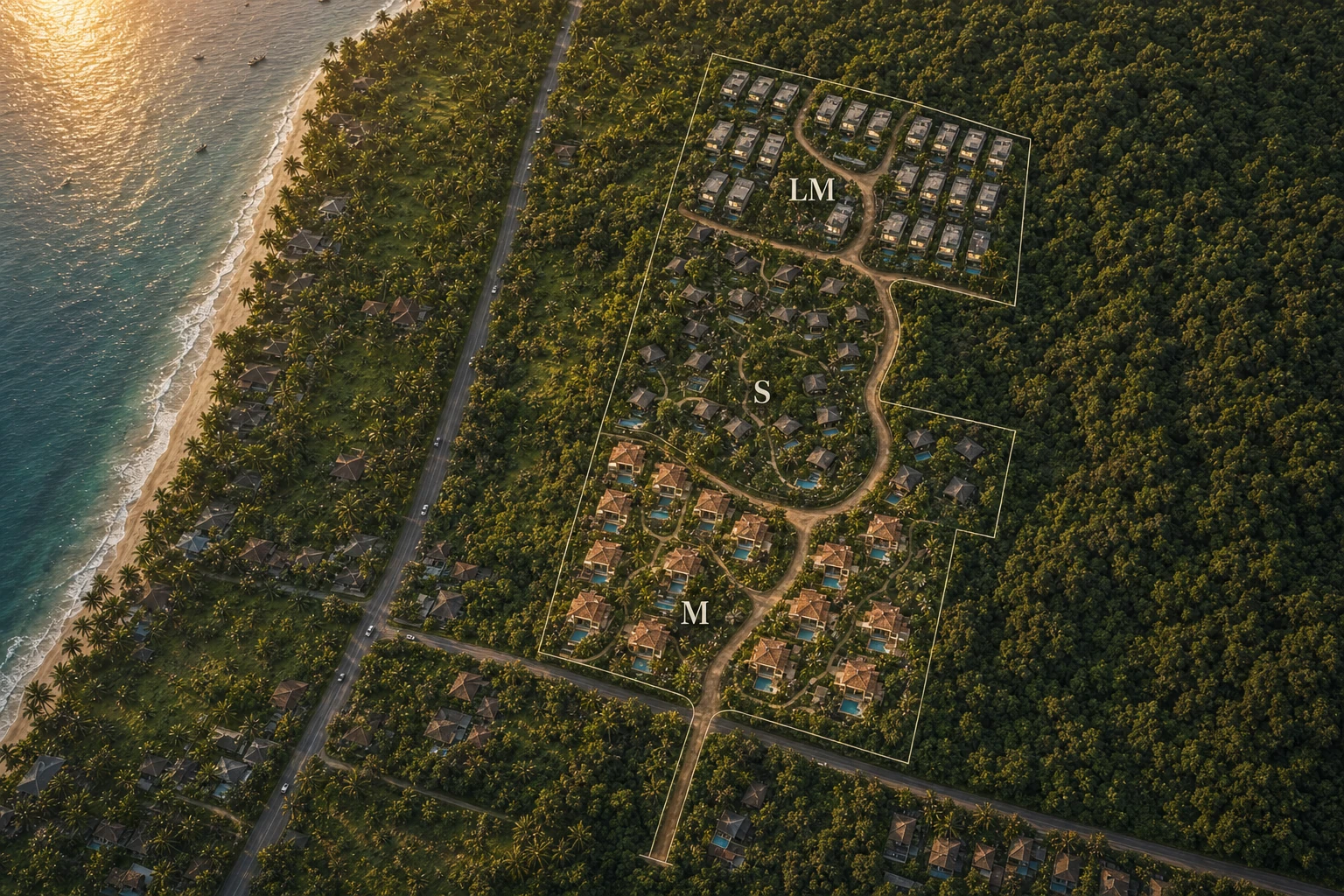
MotoGP Mandalika 2026: How the October Calendar Affects the Financial Model of a Lombok Villa
Indonesia's Grand Prix returns to the Mandalika circuit on 9-11 October 2026 after a 2025 edition with 142,000 spectators, Rp 4.8 trillion in economic impact, and 100% hotel occupancy across the SEZ. Analysis of what the anchor event means for ADR, occupancy, and the capex calendar of a Lombok villa investor.
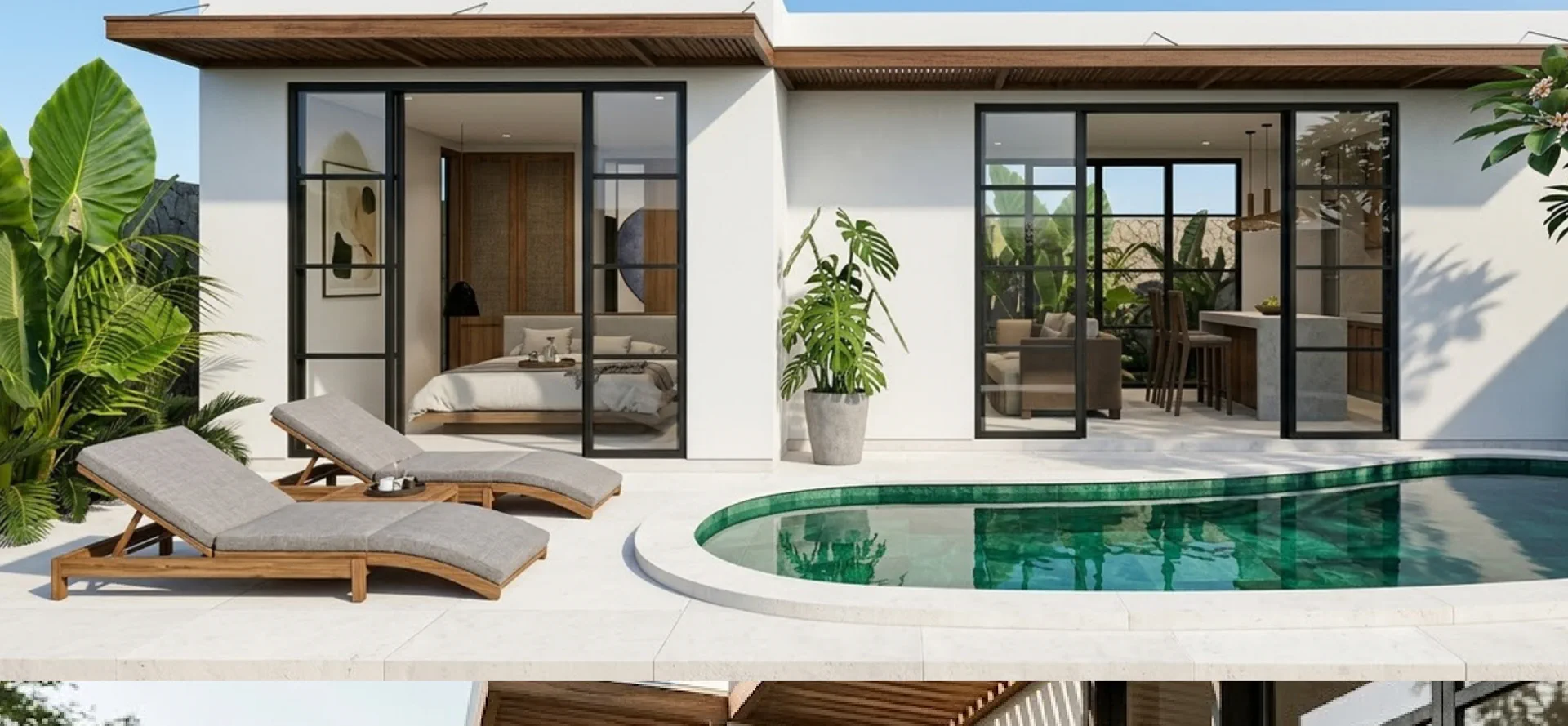
Lombok Villas Under EUR 200,000: What Your Budget Actually Buys
Four turnkey villas in Lombok from EUR 90,000 to EUR 146,000. Price breakdowns, estimated yields, and a direct comparison with European real estate at the same price point.
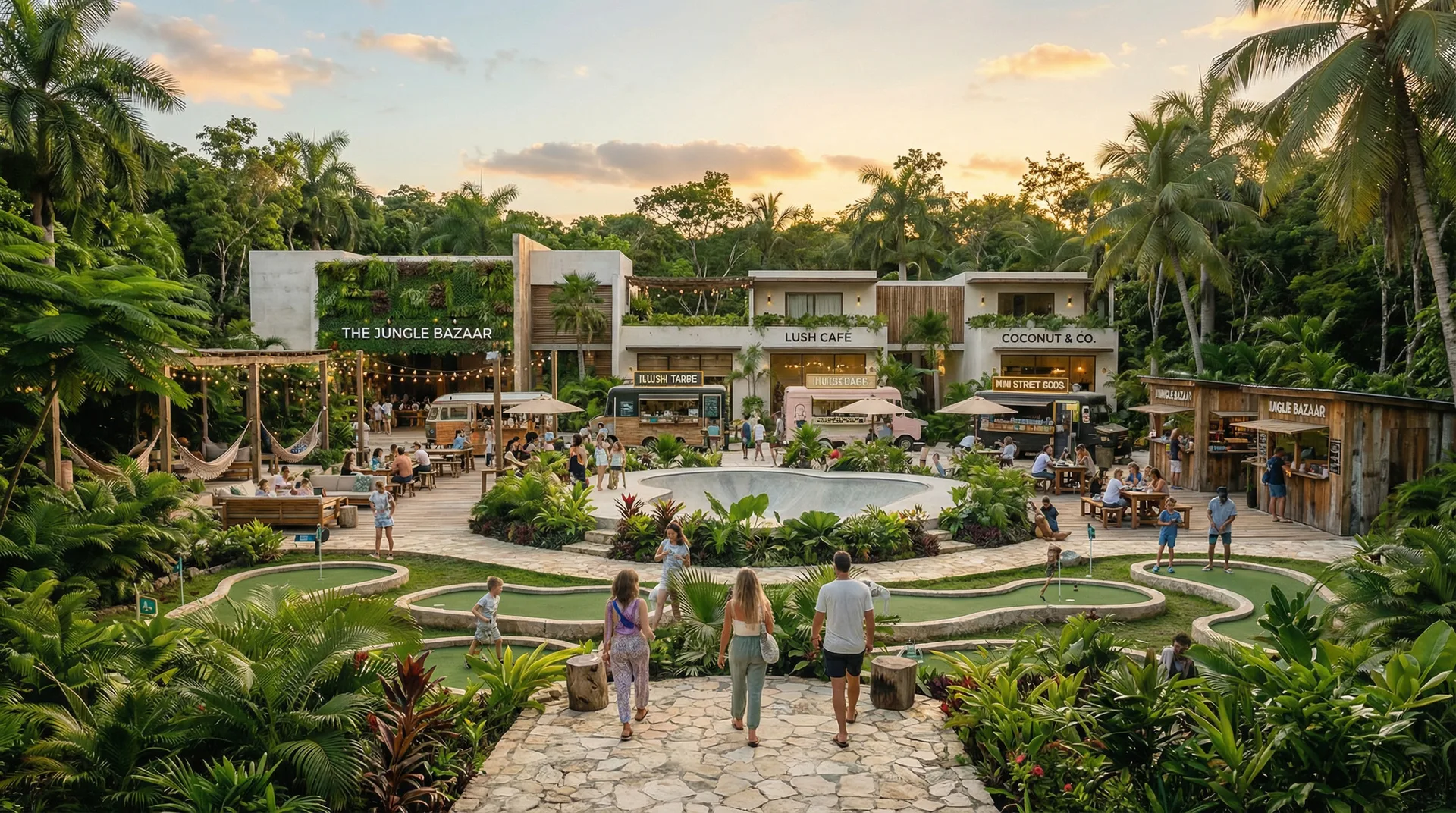
Lombok vs Bali: Where Should You Invest in 2026?
A data-driven comparison of Lombok and Bali real estate markets. Land prices, rental yields, infrastructure growth, and investment outlook for 2026.
INVESTOR DOSSIER
Want the full picture on Lombok?
Receive the investor dossier with current pricing, legal structure and a five-year projection tailored to your profile.